All posts by John

Harry Joyce

Harry is from Bracknell and attended Foundation at Reading College. He plays tennis.

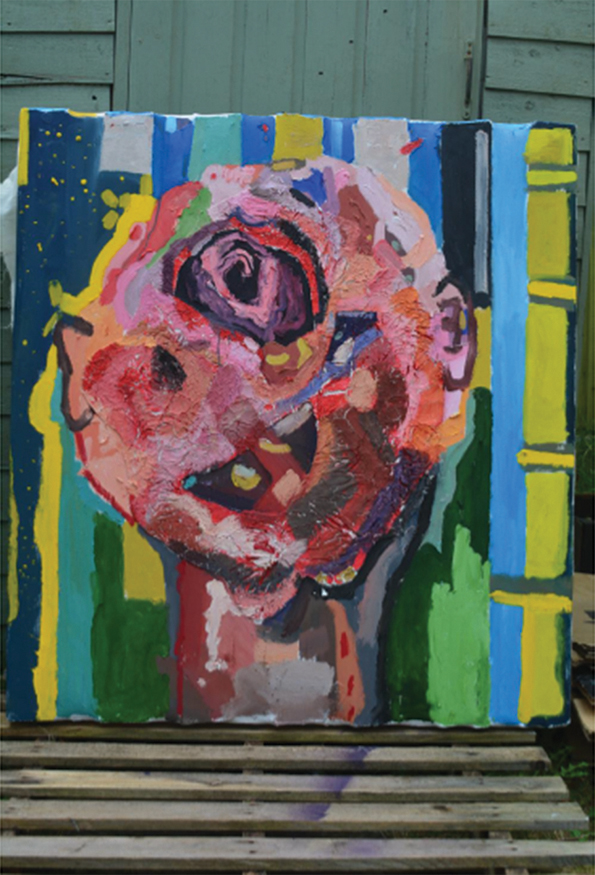
Lockdown has curtailed his animation from drawings, and brought his textural painting and sculptural work to the fore. He looks to the internet and cinema, for different forms of post -digital addiction: smartphones, video and music.

My stop motion animation, reliant on searching for motion in drawing, is an outward look at society, researching the aesthetic qualities of the cinematic and its relationship to life and routine within our post digital society. The subject, sourced from television and movies, concentrates on the textural elements of film, the materiality of the chalk and charcoal I use attempting to capture the grain and depth of the image. On the other hand, my ceramic and clay work, focuses inward, expressing a sense of self through mark making with unconventional tools, the clay a conduit to be emotively moulded and manipulated, push and scraped across cut and damaged canvas. My most recent painting practice revolves around the theme of horror, with reference to the work of Francis Bacon and Alfred Hitchcock, reliant on texture, figuration and abstraction. 
Symposium session:

Maryam Kazimi

Maryam completed a Foundation at City & Guilds of London Art School. She was on the External Events Committee, ran the Instagram account and the Anarchist Film Club. Maryam attended ‘Beaux-Arts de Paris’ on exchange, and organised a series of collaborative exchange exhibitions, in Paris and back in the sculpture bookable space. She worked part-time in graphic design and completed an Excel Internship at The Willis Museum, Basingstoke.

At the heart of my practice is knowledge and skill acquisition, an insatiable, ‘pathological curiosity’ (Tzara, T. 1918). Influenced by revolutionary attitudes such as Dadaism, chaotic, anarchic and experimental, my immediate instinct is to resist the notion of oversimplified, reductive classification. I make installations, curate environments, occasionally instigate ‘happenings’. I lead and contribute to projects that I feel passionate enough to pursue, from founding the elusive (secret) ‘Anarchist Film Club’ to the assembly of ‘Just 3 Boys’, a fictional art collective, comprising writers, philosophers, musicians and artists who feature in their own semi-eponymous stage play, ‘Just 3 Boys in Kimonos’.

I co-opt individuals to participate in situations, I offer interjections and interventions (sometimes to humorous effect, sometimes unwarranted or unwelcome). I question incessantly, sometimes provide answers to others’ questions, at times even my own. I make zines. I collect objects, refuse material and assorted second-hand paraphernalia and can occasionally be found assembling them. I make large-scale, site-specific drawings, sometimes on the walls. I scribble constantly – and can be seen to paint, even photograph on the odd occasion.  

Symposium session:
Milly Mansfield Parker

Milly is from Brackley in Northamptonshire. She attended Foundation at Oxford Brookes following a BSc in Biology at University of Nottingham. She writes for fun – prose-poetry and short fiction – and practices craft for fun – traditional carving, jewellery-making and painting. She writes and practices craft as other facets of her practice. 

My interests in trace, monolith, space, object and functionality, seem to me parts of the same whole. I find aspects of ontology, epistemology, and psychoanalysis link them together,  but the threads that seem key are the separation and connections between the self and the other, and the linking of this to the physical world through creativity and the definition of here and there. My practice has been based on exploring interactions between the self and the other using objects (made and found), installation and photographs. I have been able to develop this practice across practical and written work and also across pre- and post- lockdown activity. By reflecting upon the new situation in my work I have found a new connectivity between my practice and the everyday. I have been able to reconcile the different areas of practice into a theoretical position which has made the purpose of my practice clearer. I have been able to re-evaluate the objects made from home and find new consequence to these things, continuing the dialogue between the practical and the theoretical.  

Symposium session:
Bridie McAteer-Bowden

Bridie is from Bushey, Hertfordshire. She attended Foundation at Camberwell UAL in London. 

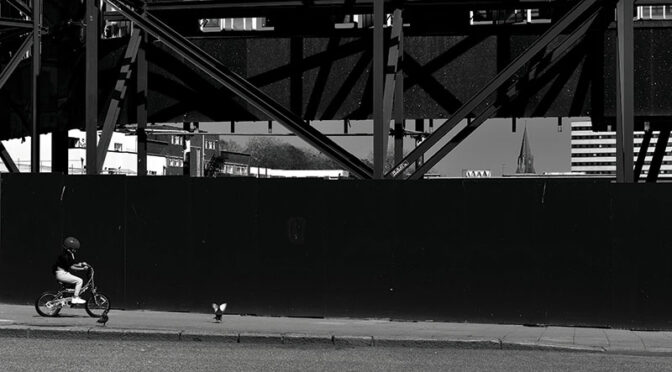
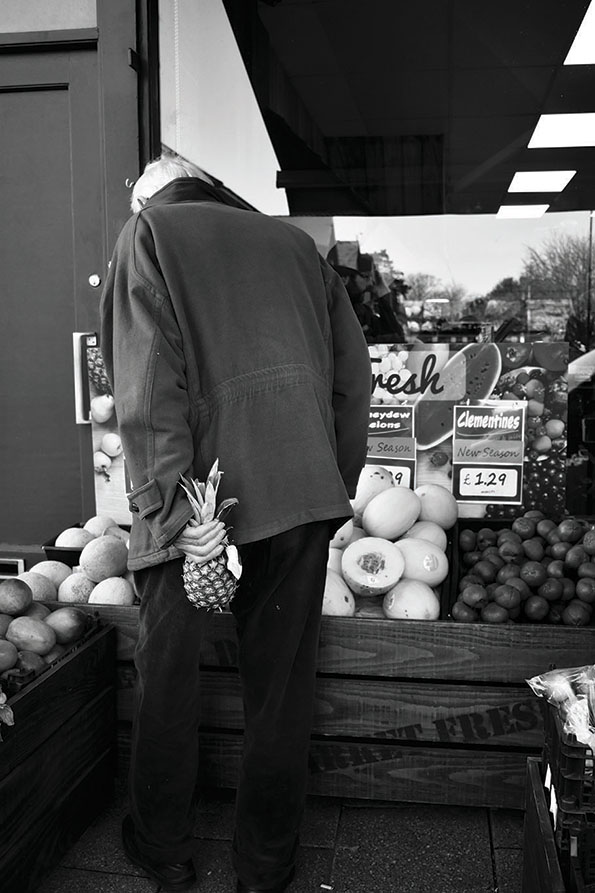
Her photography observes the interaction of people. She captures the fleeting, the unnoticed. The unthought of moments that make up all of our days. Small moments such as cigarette-breaks, car-journeys, lunch-breaks, waiting for the bus. Turning the mundane into beauty, romanticising normal situations. Capturing our ‘in between’ moments. She mainly works with black and white photography as she finds a power in their simplicity, a poetic sense of calm felt in the beauty of just the figures and moments displayed. 

Through photography, I capture the lives of the real people that unfold around me every day. I highlight and celebrate the beauty in the calm and the slow mundane, the everyday, the in-between and unthought-of moments. I chose to photograph people in these ‘in-between’ waiting, walking moments as I am aware of the difference in how time is used here. There is no pressure to keep moving- no big city ‘push’. I capture the unconscious dérive, the drifting and floating of the people in Southampton.

Kerry Mercer

Kerry is from Worthing, West Sussex. She attended Foundation at Northbrook College in Worthing. She likes socialising with friends and works at Next in the summer. 

She is interested in digital technology and what it means to be living within this digitalised era. 

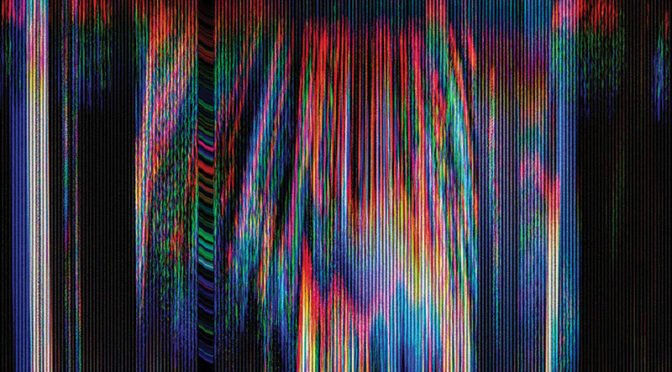
My practice focuses on our heavy reliance towards digital technology (such as our phones, laptops, TVs etc.). I aim to highlight how digitally saturated our lives are, by showcasing an overwhelming abstract digital image.

In presenting this, I hope viewers of my work can recognise the omnipresence of digital technology within our lives, by the sheer scale of my work. How it’s a powerful, influential source within society that can often be overlooked and taken for granted. I feel my work is most successful as it comments on the current societal state of quarantine, where many people relied on digital technologies/applications to fulfil their everyday environments in this confined time. 

Rhian Miles

Rhian is from Basingstoke and attended Foundation at Basingstoke College of Technology. She does weight-training and is a sales-assistant at Morrisons. She writes poetry, and reads mainly sci-fi.

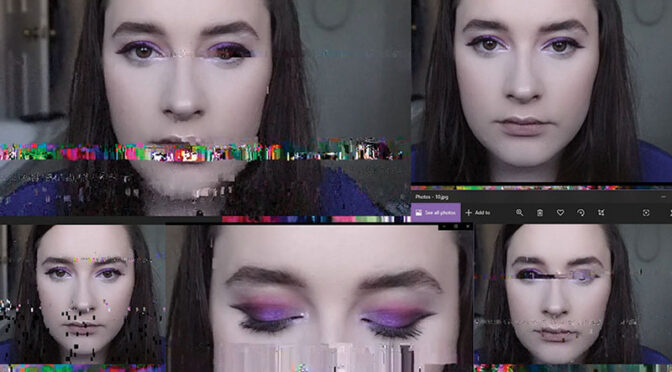
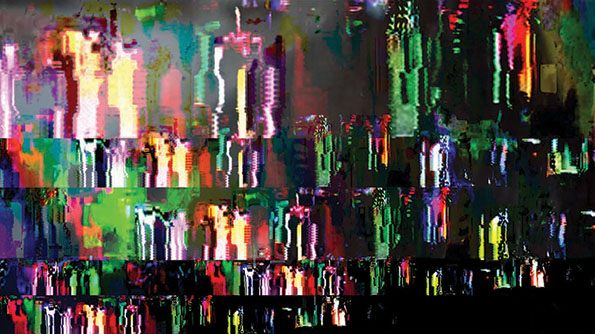
My work is an exploration of modern-world technology, specifically the connection I have with the machines built by humans. The way they run, the way they can break by accident or sometimes on purpose. Lines of data that can easily become corrupted. I make this connection evident in the subject matter itself, using glitched video and collage of myself to create an augmented reality where I am seemingly one with technology. The viewer is to be enraptured by the hypnotic gaze and allured by the sultry dance of corrupt data that runs through the glitched videos. Machines that are made can only be as perfect as the people who built them.

I think there’s a flaw in my code. Cracks in the canvas. In the squares. So many squares, with cracks. And Chips. Uneven. Other shapes, elongated. A horrible rhythm. An E I believe, out of uniform with the others. Cracks, next to shards. Grass, like billions of towering life. There’s too many people, in my vision. Obscures my vision. I take it in but my field is too vast. Unstable. They are scurrying. Forced puzzle pieces. Like an aisle of biscuits. Different colours, fancy packaging. A multitude of different interiors. Flavours. Tastes. Intention. How easily they break. Everyone. Single one. Best before the expiry date. Too much. Least. Calm. Identify. Crack.

Alex Morgan

Alex is from Yelvertoft, Northamptonshire. He studied Foundation Art and Design at Lawrence Sheriff School and lives in Winchester.

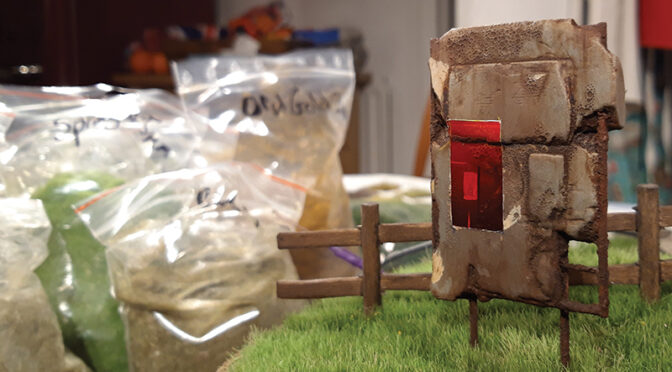
He has helped out with Stage Soc, the University’s technicians’ society, having practiced as a lighting (LX) technician and followspot operator at a Leicestershire open-air theatre. He also works as a commission miniature painter, specialising in Horus Heresy, Warhammer 40,000 and Age of Sigmar in a ‘grim-dark’ style (www.crankystudios.co.uk). He used to swim a lot and was a District Scout Network Commissioner for South Leicestershire, stepping back before uni.

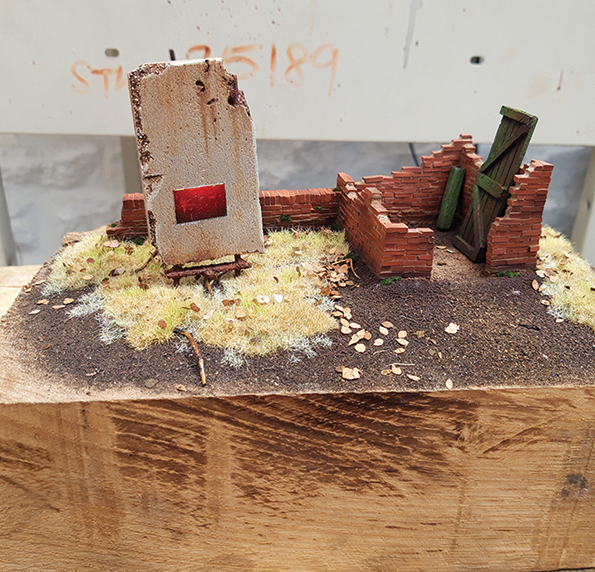
He has been in Sculpture throughout, creating immersive, eclectic installations encompassing classical altar painting, brutalist modernism and  truth to materials, the effects of time, decay and aging, and the interchange between the theatrical and the way we view contemporary art.

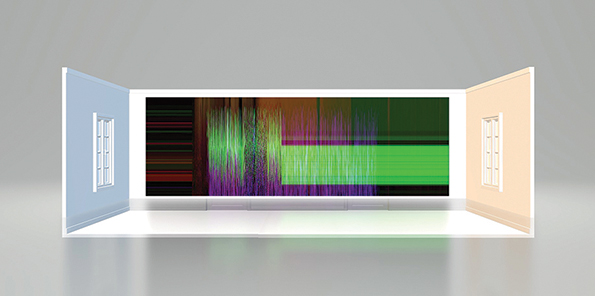
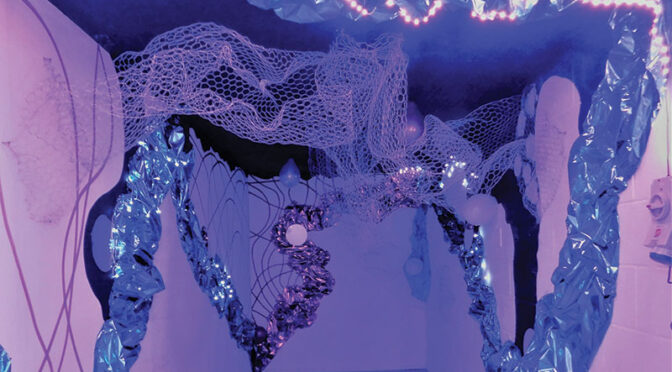
My practice aims to provide the viewer an escape from the monotony of everyday life. Driven through themes of religious presence and incorporeal absence, time forms an important narrative, leaving fingerprints of age across my work through the changes time brings to material. The work manifests as large immersive installations that absorb the viewer through theatrical illusion taking reference from the minimalist and brutalist movements and the ideology of ‘Truth to Materiality’. The sensations of presence and absence are amplified through the theatrical techniques applied within, in a discussion over how we view art in a contemporary setting.

Symposium session:

Vasilena Nikolova

Vassy is from Plovdiv, Bulgaria, the European Art Capital in 2019. She attended City College Southampton. She is a member of the Bulgarian Society and latterly the Greek Society. She works freelance as a content creator for her mother’s hand-made shoe brand back in Bulgaria; Vassy runs the Facebook page and the website, and sometimes helps out with making the shoes.

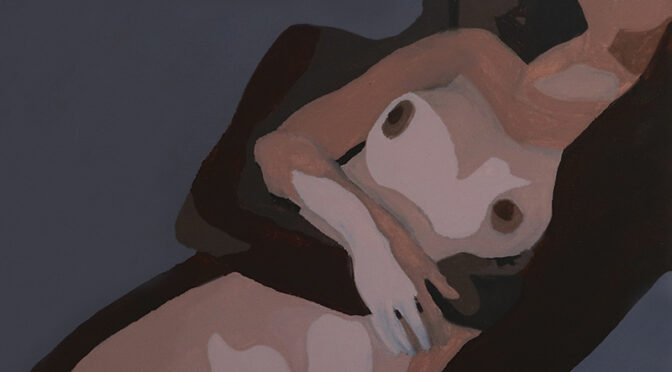
In my practice I am focusing on heart-warming events in my personal relationships. My paintings are predominantly a visual diary, where I capture strong emotional moments that I have experienced. I have been exploring this by allowing myself to be completely consumed by my emotions and memories. I use my personal feelings as inspiration to help me illustrate the figures, which are usually people I am strongly involved with. I am considering the psychology around intimacy and thinking carefully about the one common setting that can be recognised in all my paintings, the bedrooms where every little moment that I paint happens. By placing my focus on repetitive objects and domestic spaces, I am discovering an emotional weakness and discomfort in my own sentimental bond with a place.

Patricia Odysseos-Suther

Patricia is from West London and did her A-levels at St Helen’s School, Northwood. She plays for the Southampton Ladies Lacrosse Club and has completed a number of internships with production companies, helping out with post-production, marketing, advertising and Photoshop work. 

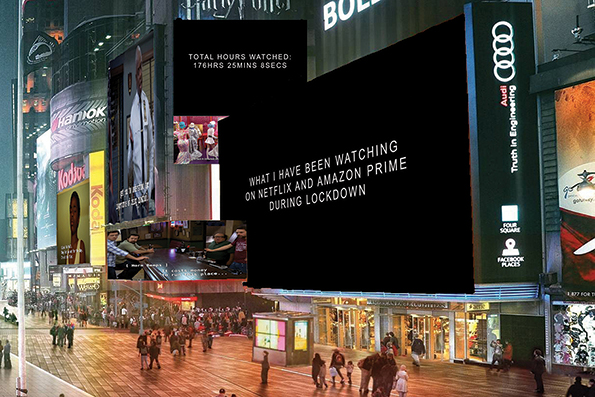
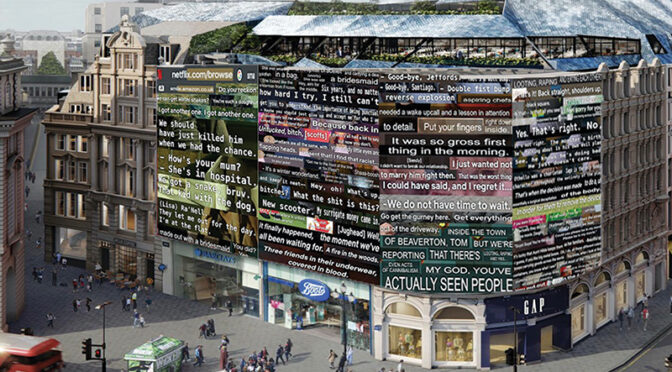
Analogue photography, from the initial capture to the development of the image, is a practice that is being displaced by digital methods. My practice looks at how aspects of the 21st century affect the relationship between the viewer, the image (taken on 35mm film), and the platform on which the image is displayed. Technological developments such as social media and instant access to cameras have changed the way we view images. We have the choice to continually take photographs, and have hundreds of images to choose from, with which we can create an “ideal” exterior for others to critique. However, since lockdown, my practice has taken the route of addressing how it has affected me and my family since all four of us are vulnerable. I approached my work in the style of Merz and Dada poetry within a contemporary context; this being through digital collage in film and photography, and working with audio and transcripts. 

We are completely immersed in the digital world, since we can’t leave the house or carry on as normal. My aim is to emphasise the monotony and nonsensical nature of lockdown and how there is no real timeline to life at the moment. My film, ‘What I have watched on Netflix and Amazon Prime’ and the collaged transcripts emphasize the difficulty of following what is going on in everyday life and in the news.

Symposium session:

Oluwatomilola Olumide

Oluwatomilola is from Lagos, Nigeria, and Wolverhampton. She did BTEC in Art & Design at West Herts College, Watford, Hertfordshire.

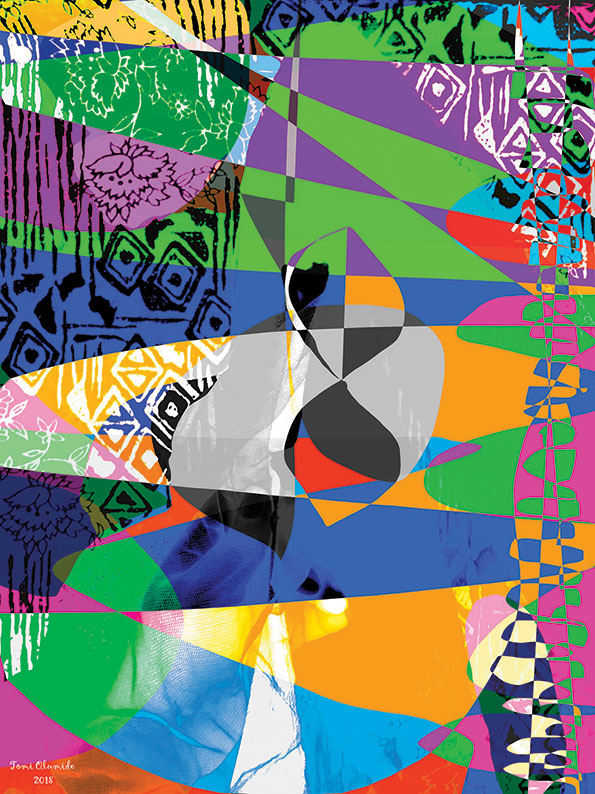
My work explores the subject of the self in relation to the otherness of the external world, where through the chronicles of self-histories I am able to portray experiences of emotions, mental fragmentation, culture shock, racial otherness and the sensitivity of memories.  

I feel my work is deeply personal but also healing, it is an assemblage of melancholy however very much with the aspirations to have conversations between the work and I on self-growth and maturity.  

My practice has been a place of exploration of mediums from drawing, to print making, and in my university career its’ been looking at the abstraction of mediums of interest; from painting again but on plaster and found objects, to amateur video performances, spoken word renditions, assemblages, collages, photomontages, fabric manipulations, sculptural installations, body performances and so forth. It’s been a constant test of what can be done and not how well to be honest. It’s been like having a flavour of ice-cream at different moments in time and savouring it until you get bored. Because sometimes a single medium in all honesty for me, can get old fast.  

I’ve found the manner of experimenting in multiple mediums quite interesting and very much satisfying because the idea of being in competition with anyone doesn’t intimidate and the idea of being ‘professional’ in working doesn’t intimidate either. It’s a very much trial and error process of making things and having fun and learning what works regardless of the politics that surrounds it. 

Symposium Session: