All posts by John

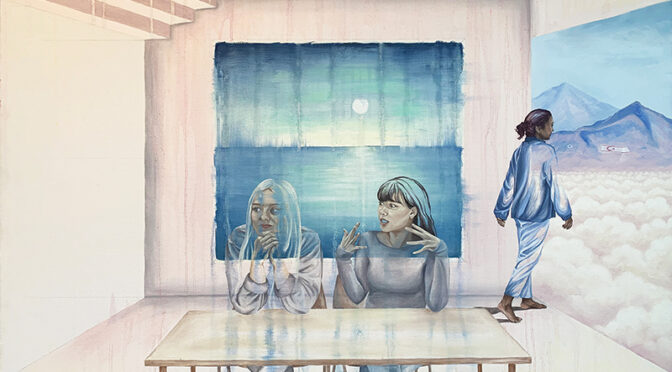
Thea Demetriou

Thea is from Nicosia, Cyprus and did A-levels at The Falcon School, Nicosia.

In her free time outside the studio, she enjoys cooking and watching movies with her flatmates, travelling to new places across the UK and petting strangers’ dogs. 

My art consists of constructing dreamlike worlds that stem from specific experiences of the real world. The subtle surrealism is a way of processing and treating political, social or personal pressures in my life. I use a gentle, pastel colour palette to produce a comforting and ethereal atmosphere, in which these moments of tension can be faced with ease. My paintings confront issues but also create distance from them; the way I paint reflects this constant drift from reality. I work with oil paints and apply the paint smoothly and meticulously, to create an illusion of reality, while also breaking this illusion by exposing the materiality of the paint in different ways. The core of my practice entails uncovering anxieties or hardships and treating them through a variety of visual means.
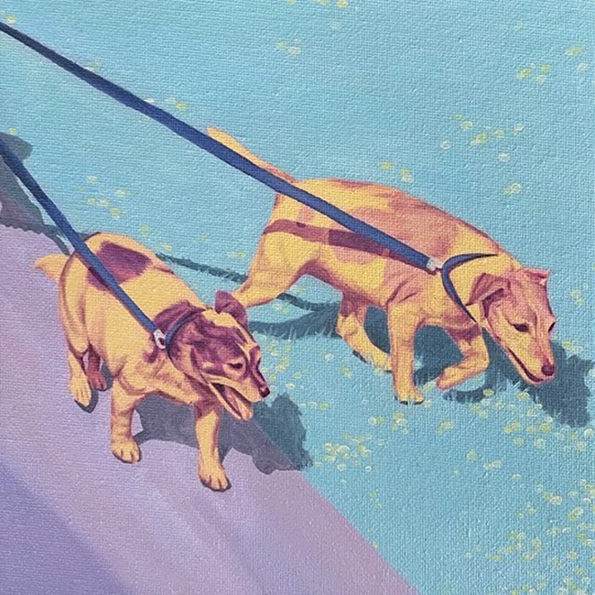
Alice Elt

Alice is from Worcester, and attended Foundation at Hereford College of Art, and now lives in Southampton. She takes French lessons, plays occasional gigs, singing and guitar, and plays a bit of golf.

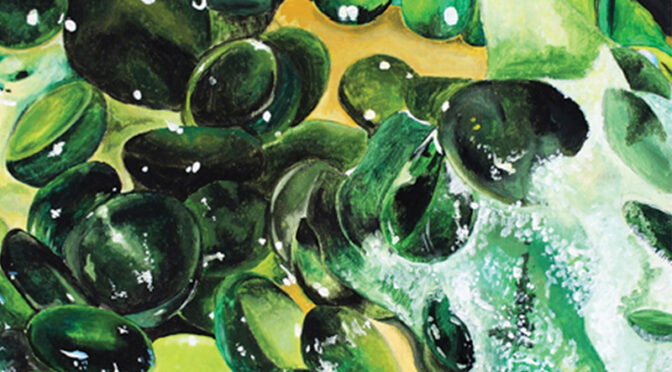
Throughout second year, I identified myself as a figurative painter, painting self-portraits and working with one male model over different projects. For the most part, I painted myself, taking charge of my body as the artist and the model. This was instrumental in forming a more positive body image. Stylistically, my work has been experimental, incorporating and testing many painting techniques. In this final semester, I have been able to extract my love of realism in painting and also focus on my use of white and light. Ice and glass have been my main topics of focus, and in future work I plan on using digital aids to enhance my photography, and experiment with series of paintings and the way in which they are exhibited.   

Lauren Gander

Lauren is from Bexhill-on-Sea and did A-levels at Bexhill College. She joined the Art Society in Southampton in the 2nd year and the Sign Language Society. She works on the bar in one of the sailing clubs in Hamble and gets commissioned to make paintings for family and friends.

Her practice, in film, deals with feelings of fear, uncertainty and tension, looking at traumatic events and then fear in general, starting with a phobia of birds, which developed in the last 5 years, which she has concluded is not about the object of fear, but the environment: indoors it is not a problem, whereas outdoors it is heightened. Lighting, music, horror films, suspense and suspenseful music are all in the mix.

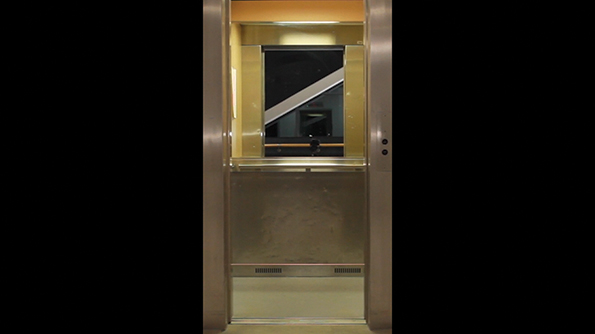
My practice poses questions of how we perceive the everyday and their attached actions but how I can then create a feeling of anticipation from this for the viewer, prior to them knowing the outcome already. Through building tension and suspense through an act of waiting, the use of a lift becomes significant as the majority of people have used and waited for a lift at least once in their lives. This then gives another purpose for the mechanical everyday other than their actual function. Not only as a mode of transitioning from A to B but a closed-off space from the outside. I would like to facilitate this further by enhancing those seemingly normal qualities and establish a different perspective by creating moments of anticipation as the door open each time, through filming and sound manipulation.

Oliver Gaspar

Oliver is from Budapest, Hungary, although he has not lived there for 5 years. He likes swimming, is learning the violin, and experimenting with music within his art practice. He works 2 or 3 long days a week when not in the studio, as a carer in different homes.

Last summer in Hungary, he went on a summer camp addressing the Anthropocene and climate issues.

I am a figurative painter and conceptual artist using art as a tool, both to process trauma and to engage with the world around me. I adopt humour and self-irony to deal with the difficulties and losses presented in my narratives.  I am deeply worried about the upcoming climate emergency and the chain reactions it will cause, which makes this topic central to most of my latest works. I believe that people are a product of their circumstances and their environment. I reject many of the art world’s conventions not because I want to but because I have to. I am using cheap and easily obtainable materials regarded as trash, both because I am poor and because I care about the environment. In spite of trying to find sustainable solutions to help the environment through the materials that I am utilizing, I believe that defeat is inevitable. I make my art with the intention of creating a memorial.

Symposium session:

Samuel Hänikene

Sam is from Essex and went to Colchester Sixth Form College. He ran the art society at Highfield, and was a member of the street sport society – skateboarding. He works at a golf club throughout the holidays.

Before Easter, I was combining print and painting, with the aim of simultaneously combining the representational and the abstract.  Since the lockdown, I have not been able to continue this line of work. I have been investigating a 15th century painting, by making drawings and theoretical research. This has resulted in the making of two works: The Drawings – 501 line-drawings after the painting – and The Practice of Investigation: Domenico Veneziano – a 5000-word essay, outlining the production, theory and result of The Drawings.  

My aim has been to investigate a painting. That investigation has led me to research texts and write in a way that I have not done before; it has led to a new process for me, of looking and understanding, and a process that I can replicate in other projects. This new way of personal study is the most satisfying aspect of my recent practice.

James Hewins

James is from Dronfield and did Foundation at Chesterfield College.

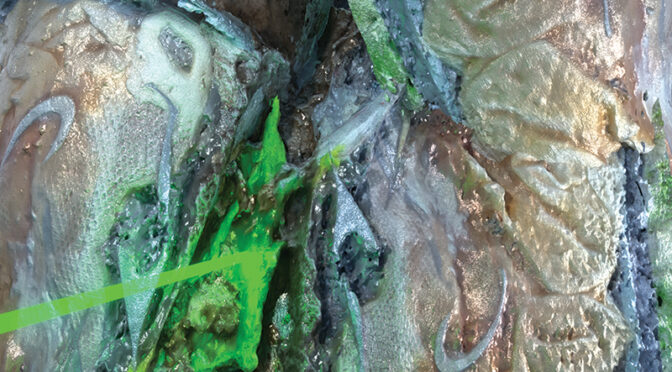
The themes of my work form around dystopian futures and post-apocalyptic landscapes. I address these subjects through sculpture, digital, and audio work. I work a lot with found materials because I can find a new material to work with that I wouldn’t have previously considered. I like the challenge and mystery of non-traditional art materials. 

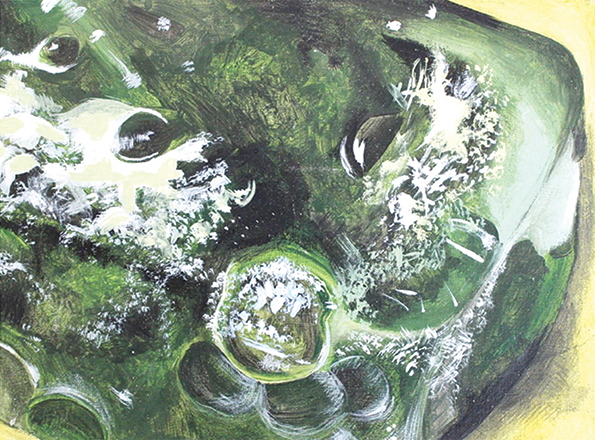
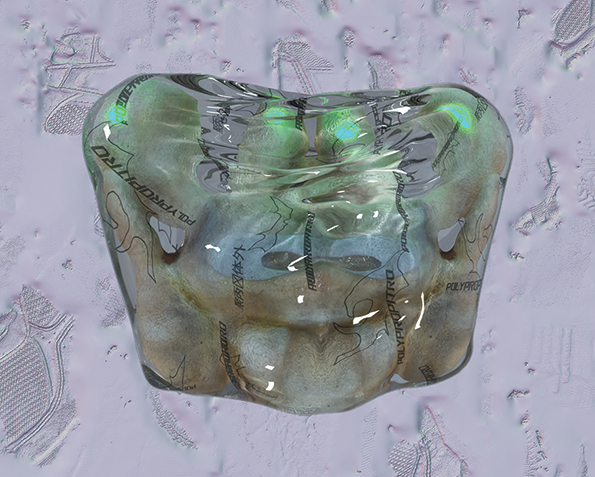
The digital work appears synthetic and glossy like fossilised objects in a digitized scape which I also try to embody in the physical objects, this synthetic flesh alien quality with a slimy texture like a fluid exuding from the surface of the object.

Symposium session:

Ciara Hinchey

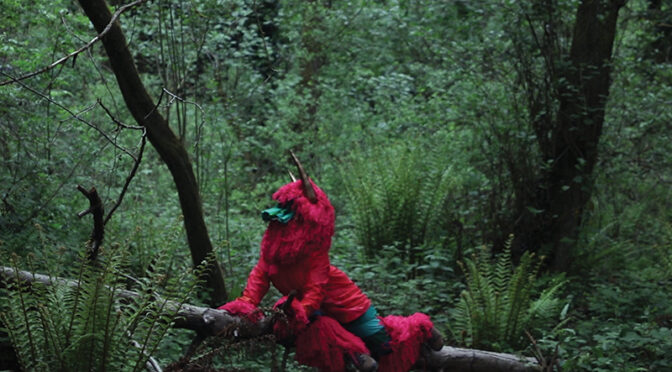
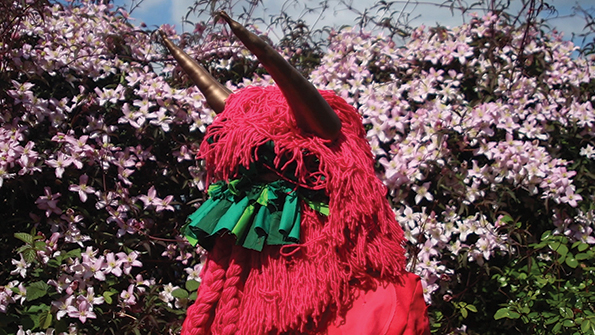
Ciara is from the Forest of Dean and attended Foundation at Gloucestershire College. At the end of her first year she ran the life-drawing society. Last July she volunteered at her old primary school, taking the children out into the conservation area in monster costumes that embody the forest, harking back to her own childhood. 

She uses hand-crafts, like woodcut printing and quilting, to make props and costumes for performative films. She wears her costumes as a way of breaking an everyday routine to enter an other-worldliness, shedding identity to become characters that engage with the wild landscape of the Forest of Dean. The other crafted props are placed within the forest context and removed of their domestic function, freeing them to adopt more magical and narrative driven roles in her developmental folklore of the forest.

There is an ancient and ever shifting narrative that humans tell themselves about wandering into the wilderness and confronting savage monsters. These imagined monsters are often manifestations of our repressed fears and primal urges: when the hero faces the beast, they actually face their inner wild self. There can be pleasure and release in delving into our fears and accepting hidden characteristics. My work lies at this threshold between humanity and the wilderness. Throughout my practice I have been growing a paracosm of hybrid creatures that embody human and bestial qualities situated within the ancient Forest of Dean. 

Symposium session:

Katerina Iona

Katerina is from Limassol and attended Fresh Art College, Cyprus. She joined WSA at the beginning of Year 2. She did dance-training from the age of 4 but had to stop training when she was about 16 due to an injury. However, she still dances today. She is a member of the Greek and Cypriot Society and the Belly Dance Society.

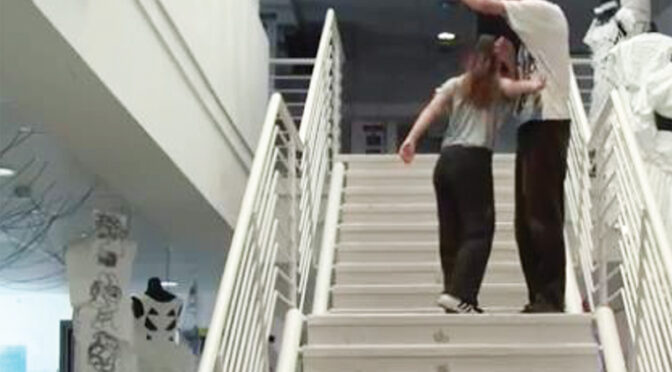
Her work comprises choreography and voiceovers – mostly poetry read aloud in Greek, with an emphasis on the strength of body language, and the finished product short, projected videos.

My personal practice is primarily associated with performance art. More specifically, it is a spontaneous improvisation accompanied with Greek audio presented to the audience mostly in digital format. My performances are directly related to emotions, this is the reason why I chose to perform in the sound of my own language instead of English. This may result to the majority of the audience not being able to understand and process the audio and its meaning, however the pieces I create are very personal, intimate and emotional. I believe that the ambience that I want the audience to experience is successfully transferred to them through movement, expressions, possibly the music in some of the audio used, as well as the tones of the voices that are heard in the video.

Bethany Jarrett

Bethany is from the village of Shrivenham, in Oxfordshire. She lives in Winchester. She did Foundation at New College in Swindon. She has two jobs: waitressing and working at Mcdonalds. She enjoys long walks, and socialising with her friends.

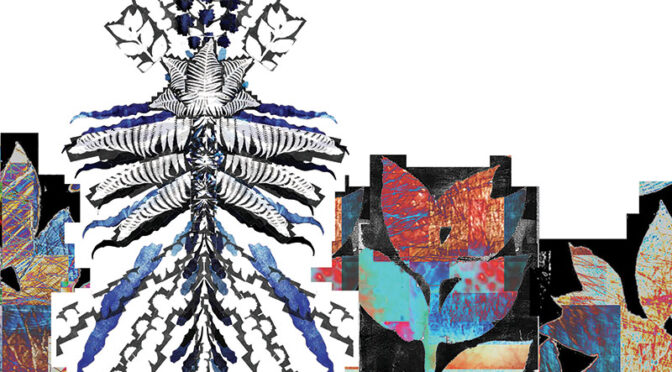
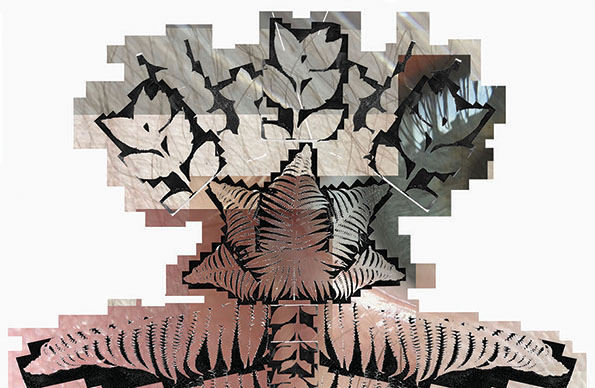
Within my practice I explore my biological body in relation to the organic physical world, through documentation of my encounters and experiences with the material environment, through the lens of the camera, I try to understand what it might mean to be human living in the current Anthropocene epidemic. Then rendering collected material from body and environment through collage, photo overlays, video, sculpture and print making. I explore the materiality which make up these complex systems, creating correspondences between the two.

This exploration of body and environment has led me to creating a Chimera-like being, a hybrid creature capturing an essence from nature, human and animal. The creature is built up from prints of human limbs and organic natural shapes, all symmetrically placed together creating an insect like body. Through the Chimera I have tried to blur the lines between the human, the animal and the natural world. As we have lost our connection to the place we live, due to our species innate predisposition to greed. The Chimera is surrounded by post-apocalyptic growths. These plant-like organisms wear a new skin, one which resembles human like textures but has grown through the debris of DNA experiments, from where electrical and nuclear waste has nourished the soil. 

Thirsika Jeyapalan

Trish is from London and did a Foundation at the Richmond upon Thames College. She was the studio rep for painting, and did the exchange module in Stuttgart, Germany. She is engaged with Tamil diaspora activism on the Tamil Struggle in Sri Lanka. In 2019, she had work in the show which she helped organise, ‘Tamils of Lanka’, with the Tamil Information Centre in London.

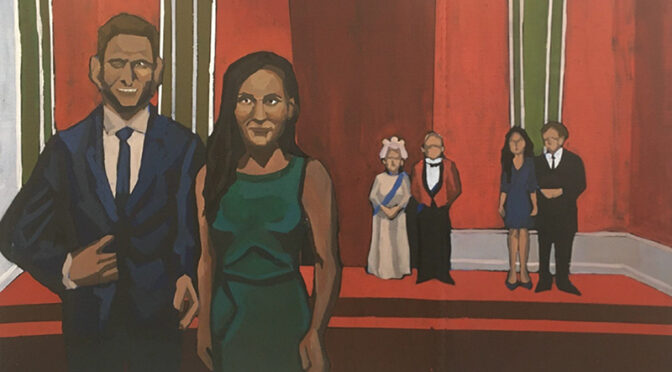
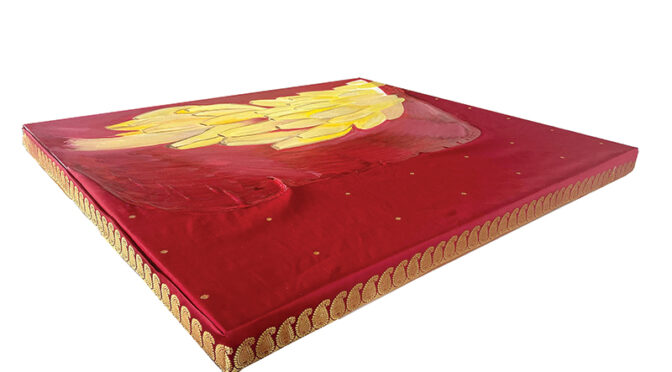
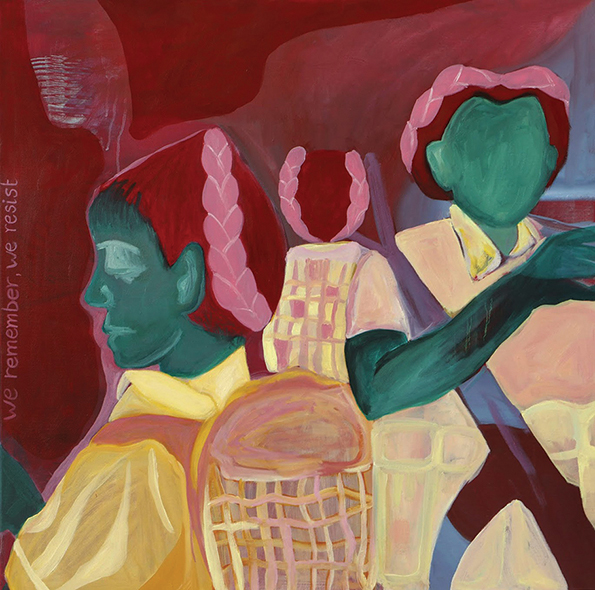
My art has always revolved around my conflicting identities, directly referencing scenes from the Sri Lankan Civil War (1983 – 2009) between the minority ethnic group, the Tamils, and the Sri Lankan Government and certain aspects of being in the diaspora as a second-generation British-Eelam Tamil. As a young Tamil Activist, I keenly attend protests, read and discuss Sri Lankan Politics. I reflect on my memories from my last visit to my homeland, three years after the war ended. My practice predominantly uses oil paint. I also use film to comment on events in Sri Lanka. I am constantly battling with positioning political themes within my paintings in a way that is not didactic: the recent elections; the disappearances; the discrimination against Tamils; these are ongoing human rights violations that I continue to address. The surface of the canvas explores a field of abstraction but remains anchored by strong narrative elements. 

Due to the lockdown, and being away from home made me miss my mother’s food, this feeling of craving her food made me cook my mother’s recipes and documenting it regularly. I then realised how food made me feel especially in these times, it made me feel happy and sane.  My practice has shifted away from the Tamil Struggle and Sri Lankan Politics during Lockdown. However, I feel that Tamil food is an integral part of our culture and it is political. Food also highlights the language of love and the resistance of the Tamil diaspora. Being a second-generation Tamil and continuing to cook Tamil food itself it is a resistance and grounding me to my roots.