Rhia is from Ipswich and attended Suffolk New College. She was in the Life Drawing Society, worked with the immersive performance troup Paradoxagirls, with Mechanical Menagerie, and does other summer work related to festivals.
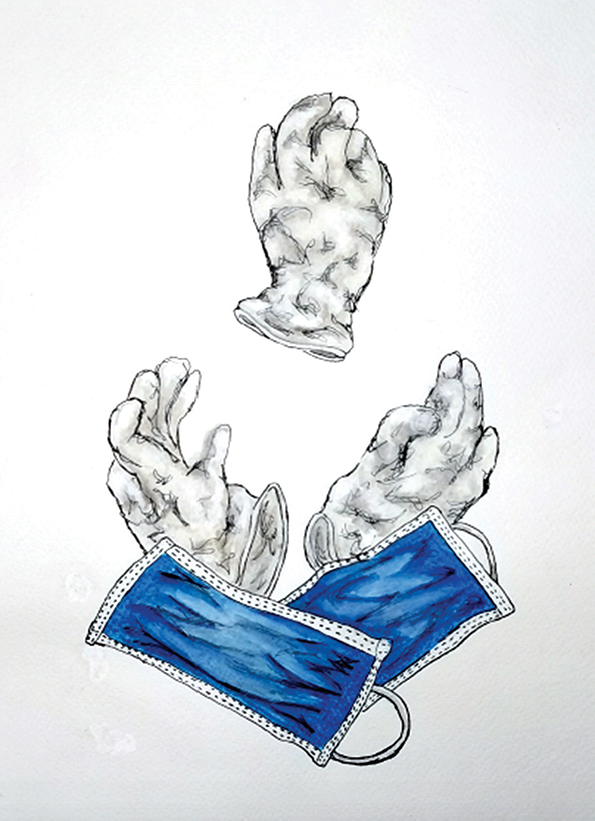
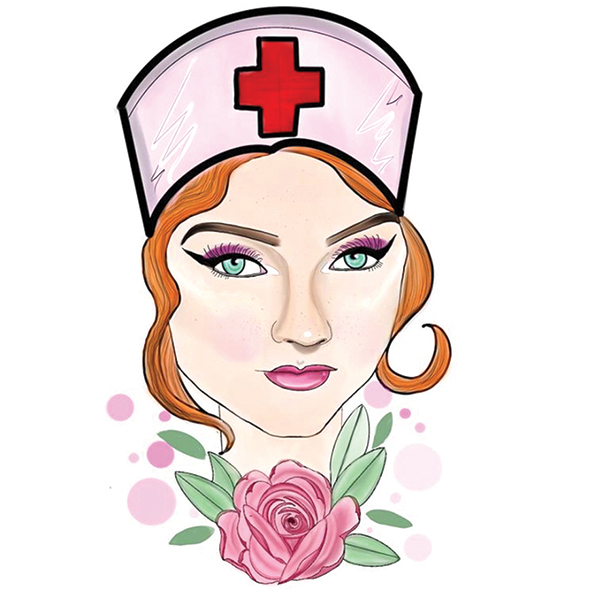
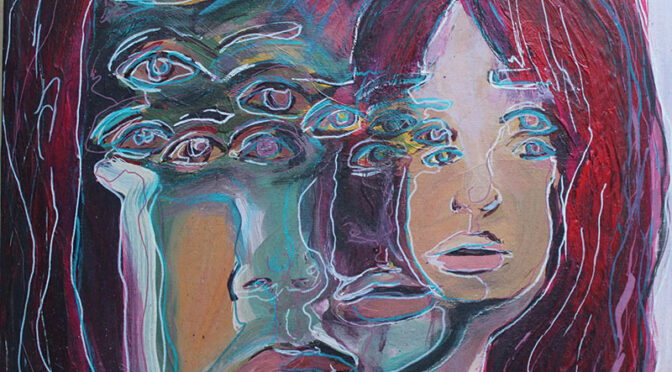
Over the course of the year my studies, practice and resource have predominantly focused on personal struggles and the female experience: how we are perceived by the world; how it reacts, interacts and can eventually shift our natural state of being; sexuality, personal boundaries and the defensive masks we show to the world. I also investigated the struggles of body, health, fertility, miscarriage and the taboos surrounding them.
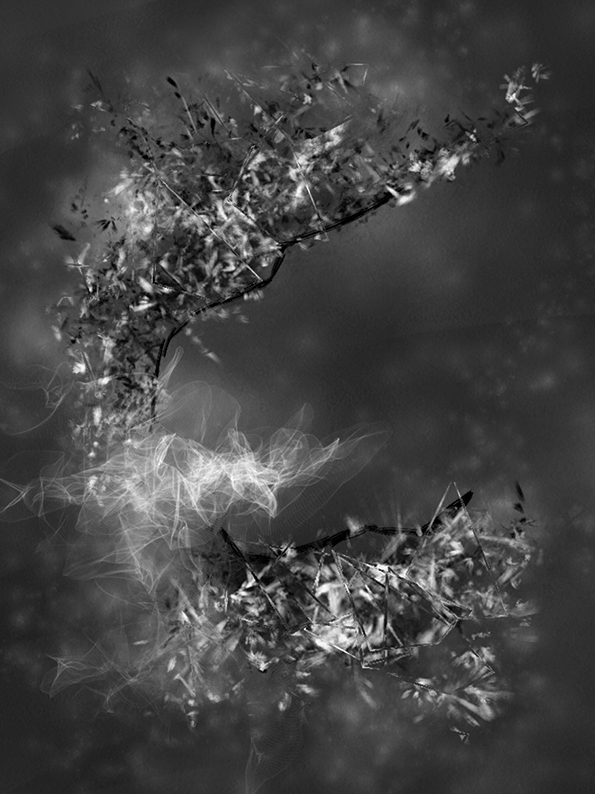
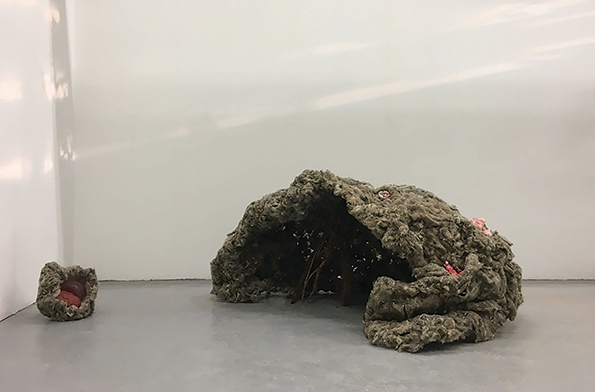
Georgie is from Wincanton, Somerset and attended Foundation at Strode College. During lockdown she stayed in Winchester. She likes video games, and The Sims even played a role in imagining what her degree show could look like. Her work, even her sculpture, is about drawing: objects made of straw mixed into plaster have graphite powder added to bring the charcoal of her drawings into the third dimension.
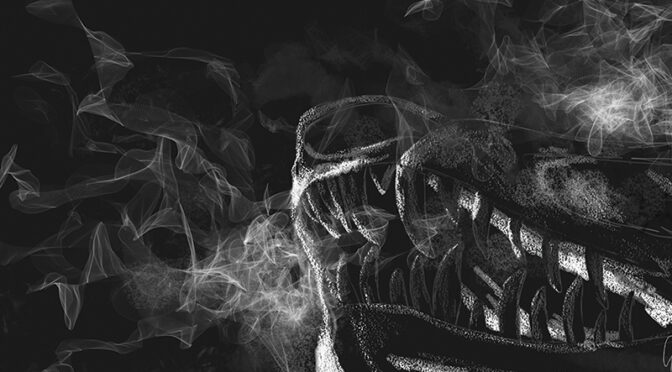
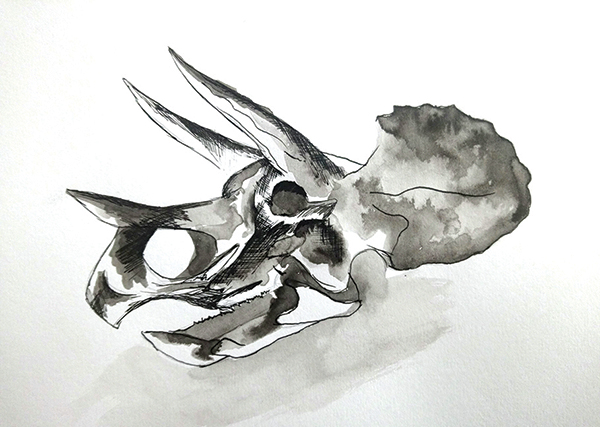
My work is focused around mark-making, using various materials and tools to create drawings, paintings, prints and sculptures. Predominantly using dinosaurs as a subject. I use the term ‘subject’ loosely as the subject gets blurred and fragmented, so becomes an entirely new thing. The use of dinosaurs as a ‘subject’ is also misleading as the work is not about dinosaurs, but about mark-making. The drawings focus around using charcoal and paint mixed together on the paper in fast, expressive motions. The sculptures use wood and chicken wire as an armature with plaster and straw built on top to create the ‘flesh’ of the sculpture. The textures of the piece are important to me as I work with incorporating touch as a crucial sense, both in the making and the ‘viewing’ of the work. All the individual elements come together as one in an installation.
During lockdown I started to work with digital forms, using a tablet to recreate a charcoal texture on a 2D screen. The subject matter became more prominent and started to morph, leaning more into why I find dinosaurs so interesting. For instance, thinking about how information is lost through the process of fossilisation and archaeological excavation. A few series of works highlighted this way of thinking, for example ‘First Impressions’ and ‘Layers’.
Bryony is from Hayling Island, Hampshire. She attended Foundation at South Downs College, Hampshire.
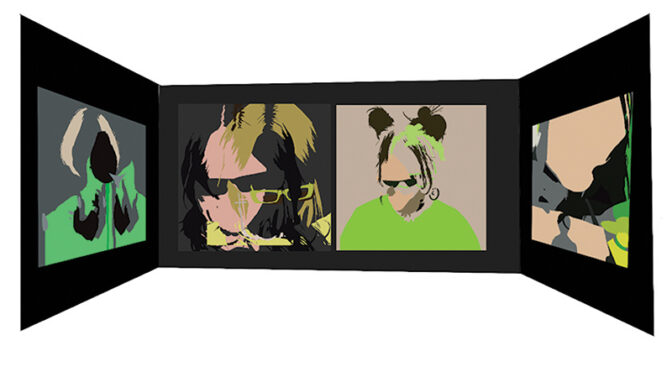
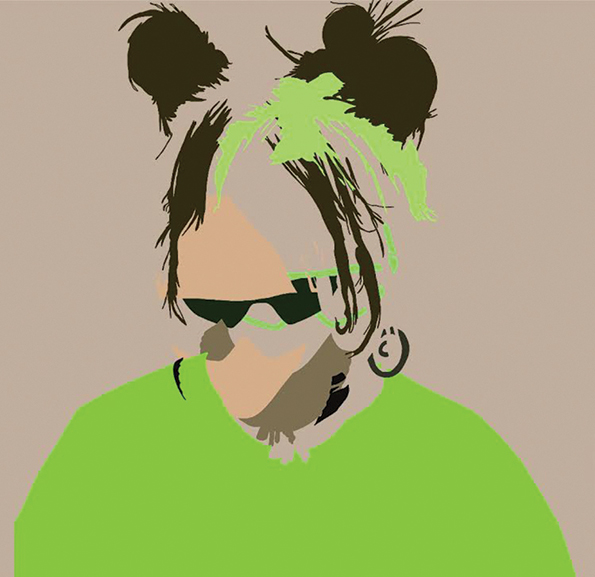
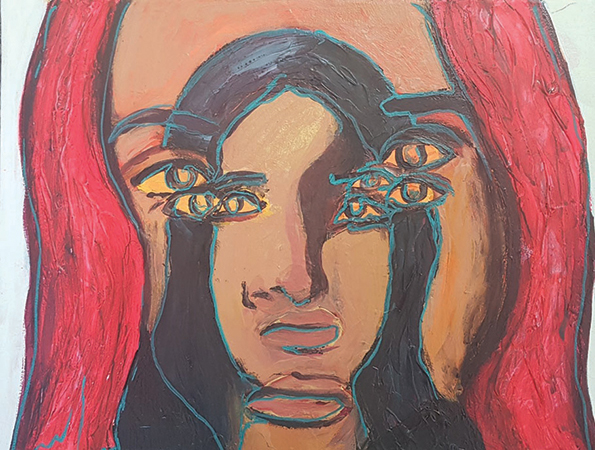
Her work is based around the process of manipulating digital images by distorting and layering sections and then painting these onto large scale canvases.
I aim to push the boundaries of what we see portrayed on social media and how far I can manipulate and distort the image but still leave it recognisable.
I use images of iconic celebrities from their social media and draw the image digitally. I then layer the image digitally and separate each layer to distort and manipulate from the original. How far can an iconic image be distorted before it becomes unrecognisable? My final image is then left without many of the iconic & finer details or human features. This then goes onto form a new distorted image which I hand paint onto a large-scale canvas.
Sabrina was born and raised in West London. She studied Art & Design at Uxbridge College and spent her free time coaching under-11s at Hillingdon Athletics.
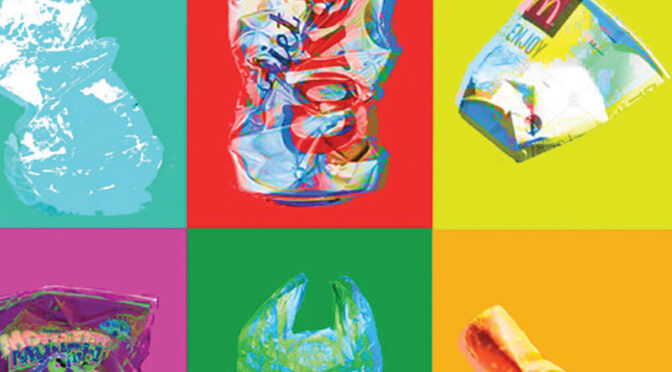
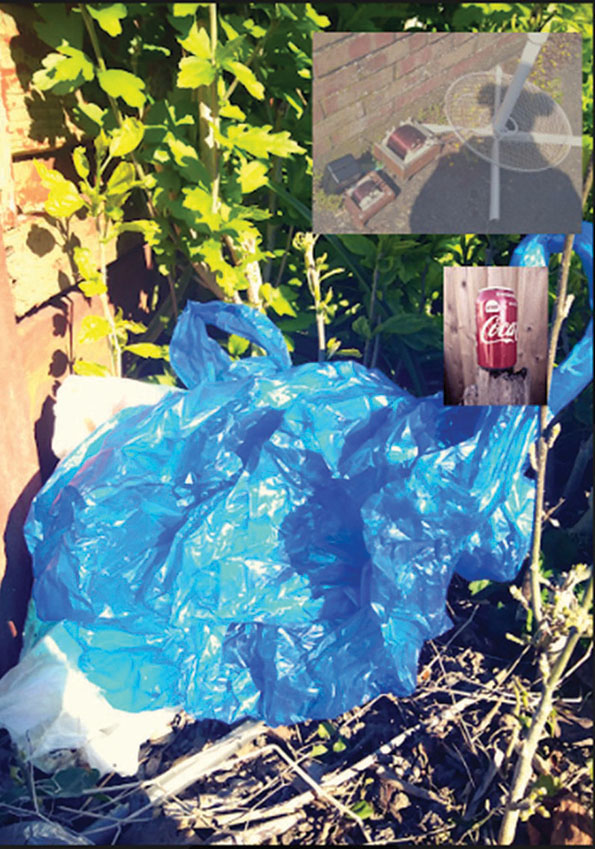
My work is typically centred around purely found objects as I was drawn to the idea of repurposing these items and seeing what they could become. I began experimenting by pairing sculptural elements alongside scans and photography to see what they would create. In doing so I started seeing these discarded items from different perspectives and in different formats. From there, I experimented with assemblage, combining two or more items to create something entirely new. While in lockdown my practice has developed further. Although still working with found objects, I have focused more on my photography and have begun experimenting with digital collage, printing and cyanotypes. Through these practices I have really been able to explore and express my perception of littering and throw-away culture.
Morgan is from Portsmouth and attended Bayhouse Sixth Form, Gosport. She was a student Ambassador, a member of the External Events Committee, and a bar-manager at The Willow Tree.
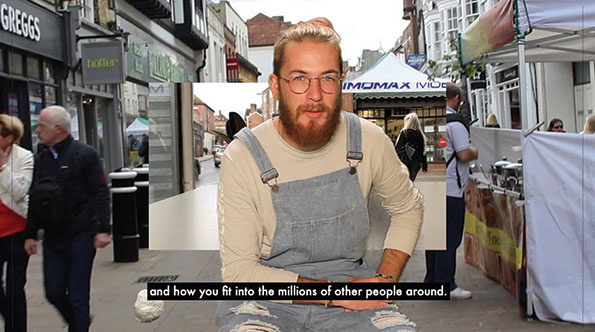
Her practice is with mixed digital media and sound, marshalling green-screened snippets of real life and a bassy soundtrack into an epic production of the everyday.
My artwork draws attention to everyday life in a way that doesn’t make you think “oh fuck, not this again.” It enhances the idea of the collective experience of being alive in a way that is slightly less terrifying than watching the news. With the apocalyptic tones of today’s climate, it is easier than it’s ever been to spiral into an existential depression pit and not even fancy going outside. But my work aims to bring to light the people and the stories that make it all worth it. To make the burden of the boulder a little less heavy. Each one of us is just pushing our boulders up that hill to let it roll back down again, but it happens to all of us. Ultimately, we are all Sisyphus.
Georgia is from Southampton and attended Eastleigh College. She loves spiders.
I have always been interested in the occult, witchcraft, nature, femininity, the gothic, cinema, tattooing and the taboo since I began creating artwork. The reason these themes interest me is because they all have something dark but alluring about them, so to be able to combine elements of these different themes in order to create something that is aesthetically pleasing to the eye is a great way to communicate a message of female empowerment to my audience, and that there is no reason to fear strong women, but that we must embrace them. This same sentiment goes for tattooing, nature, occultism and the taboo.
Lauren lives and works in Southampton and attended Foundation at Eastleigh College. She enjoys bingeing Netflix, video games and Youtube in her spare time.
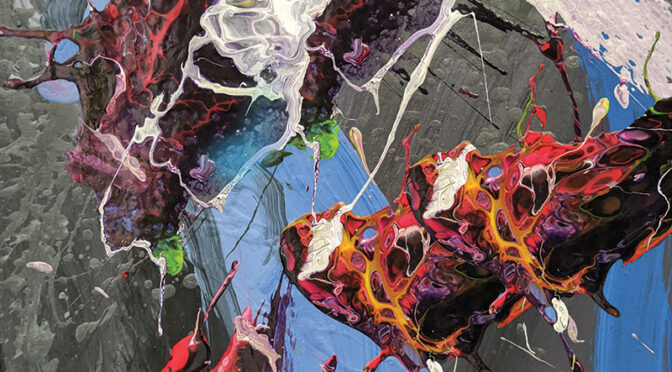
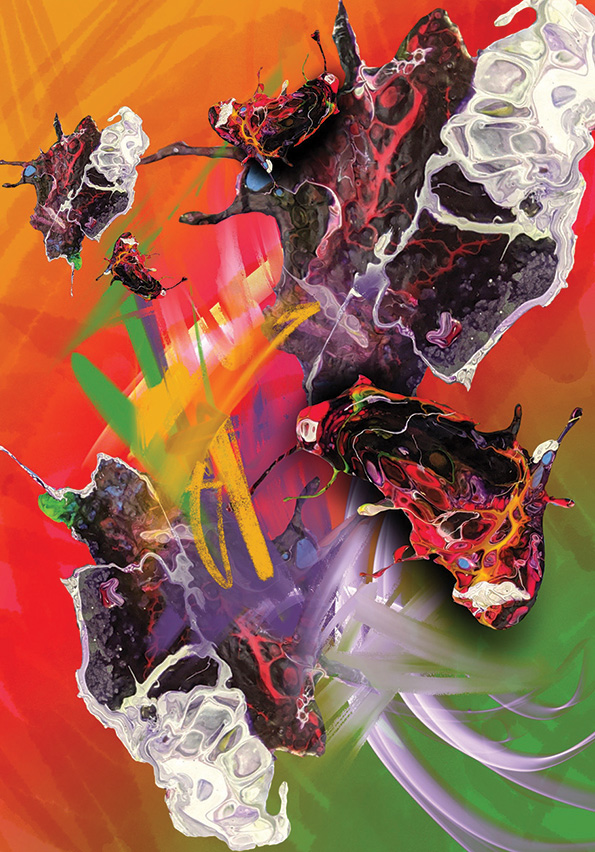
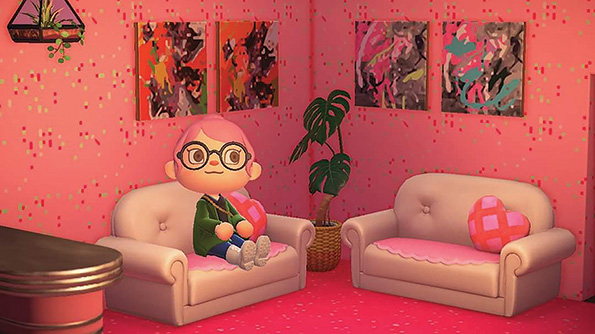
Her work is a process-led engagement with materiality which has recently gone digital. Since lockdown she has embraced her interests and has converted all her physical and digital paintings from her final major project into the world of Animal Crossing on Nintendo Switch in her own final exhibition.
If you ask me how my work is going, as a student in the 21st century I will promptly direct you to my Instagram page (and ask you to follow it if you haven’t already) to get a mediated overview of my practice instead of explaining it in great detail or asking you to come to my studio. Yet, my goal in my abstract painting is to ask you to look at it for longer. I think my practice is investigating the tension between these ideas. Being aware of the dangers of the disconnect between the digital and immediate reality. Whilst simultaneously trying to play along with it and try to work in harmony with it.
My paintings are also about painting itself. I want to question what painting is or should be. I want the viewer not to think about the heaviness of the politics of contemporary painting. To immerse the self in a world of plastic colour, and to see the paint as objects in space whilst simultaneously a study of material on surface.
I had always used digital methods to manifest my paintings in a different way. I took pictures of my process. But part of me felt guilty if I sat at my computer all day in such a big studio space. Lockdown has actually enabled me to take my work a bit further. I pushed my work not just from physical to the digital realm but into a virtual space, where the paintings can be viewed from different angles rather than on a 2D screen. There is a deeper space within a video games’ screen.
Lily Flo Is from Stroud in Gloucestershire. She attended Foundation at South Gloucestershire and Stroud College. She spent a semester abroad studying Fine Art and Spanish at Universitat Politècnica de València, and attended Spanish classes at the Avenue Campus to continue improving her Spanish. She is passionate about environmental issues and a supporter of ecological movements such as Extinction Rebellion and Stop Ecocide. In the first and second year she belonged to the Acro-Yoga Society, where you work with a partner to create balances and stretches, where one of the pair is lifted by the other. When at home she usually works in an independent jewellery shop selling pieces by a collection of hand-picked artisan designers.
Based in the sculpture studio I have been primarily experimenting with sculptural techniques, though I frequently prefer the video documentation of the process rather than the sculptural outcome. I found that my sculptures made from wax were too solid, rigid and dead. I’m fascinated by the interplay between moving image and physical objects. The videos possess a sense of a living being.
Recently, I’ve been experimenting with physical materials that allow for movement, like strawberry jelly, silicone and latex. I’ve also introduced soft, tactile fabrics and foam. Additionally, I’ve enjoyed using chicken wire as the base armature for larger sculptures because it gives them a wobbly, jelly-like quality when touched.
The main themes I am developing relate to the body, both human and animal. Especially looking at the female body, how it is treated in society, focussing on reproduction and maternity, the abject, and our relationship with bodily fluids. When does a being cease to be considered sentient, with its own agency and experience, and begin to be treated as an object, something to be consumed, a piece of meat?
Shirley grew up in Wiltshire and attended Foundation at Bath College. She is a supervisor at a Holiday Inn, sometimes teaches guitar, mainly to friends. She took a year out from Printmaking and with no presses at home, got back into painting and drawing so moved to the Painting studio for Year 3.
Working with mixed media, I begin by photographing people I have an emotional connection with and then print these photographs out to make them into physical objects. I trace over them on acetate, tracing the main form of the figure to create an interpretation of the initial image, limiting the time spent to form a quick, abstracted line drawing. I use the drawings as reference for my paintings, layering with acrylic ink, charcoal and paint pens. The absence of the original image allows me to interpret the acetate figures differently, further abstracting the shapes to create spatial ambiguity. I address the ideas of disrupted portraits and juxtaposition of foreground and background while finding a balance between the use of fluorescent colour and a range of muted tones, attempting to evoke an emotional response in the viewer.
Dreamer, based in the Printmaking studio, makes objects, performance-works and video, according to a long-term strategy constructed around preoccupation with her own eventual fate.
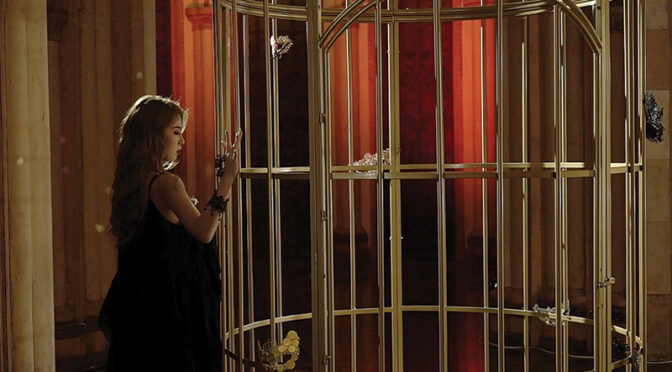
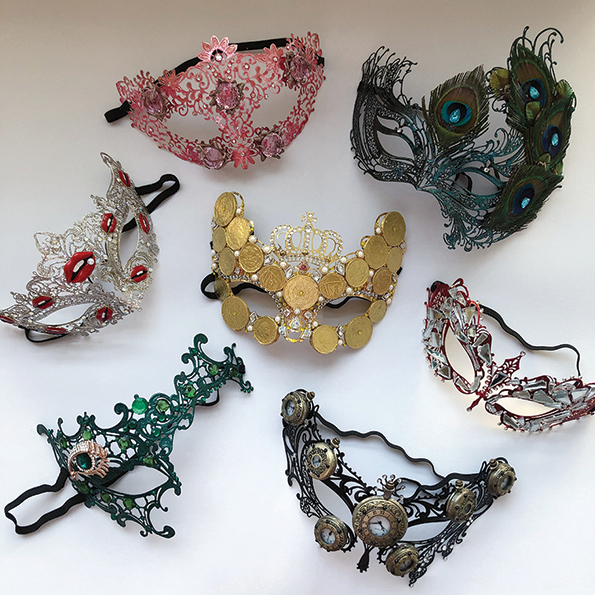
The topic of this artwork is the Seven Deadly Sins, inspired by the sins of mankind: Pride, Envy, Anger, Sloth, Lust, Wrath, and Gluttony. In today’s materialistic society, people are living their lives in their own ways, and losing their sensitivity to society and their surroundings. I created this set of disguise artworks to express my thinking on human nature and an evil world. My final piece is a performance-based video, based on an installation comprising a huge golden birdcage and the seven masks, and it expresses my ideas about death. I designed a magnificent funeral for myself as the conclusion to a recurrent dream of death which has driven my practice.